Volunteer Management Toolkit
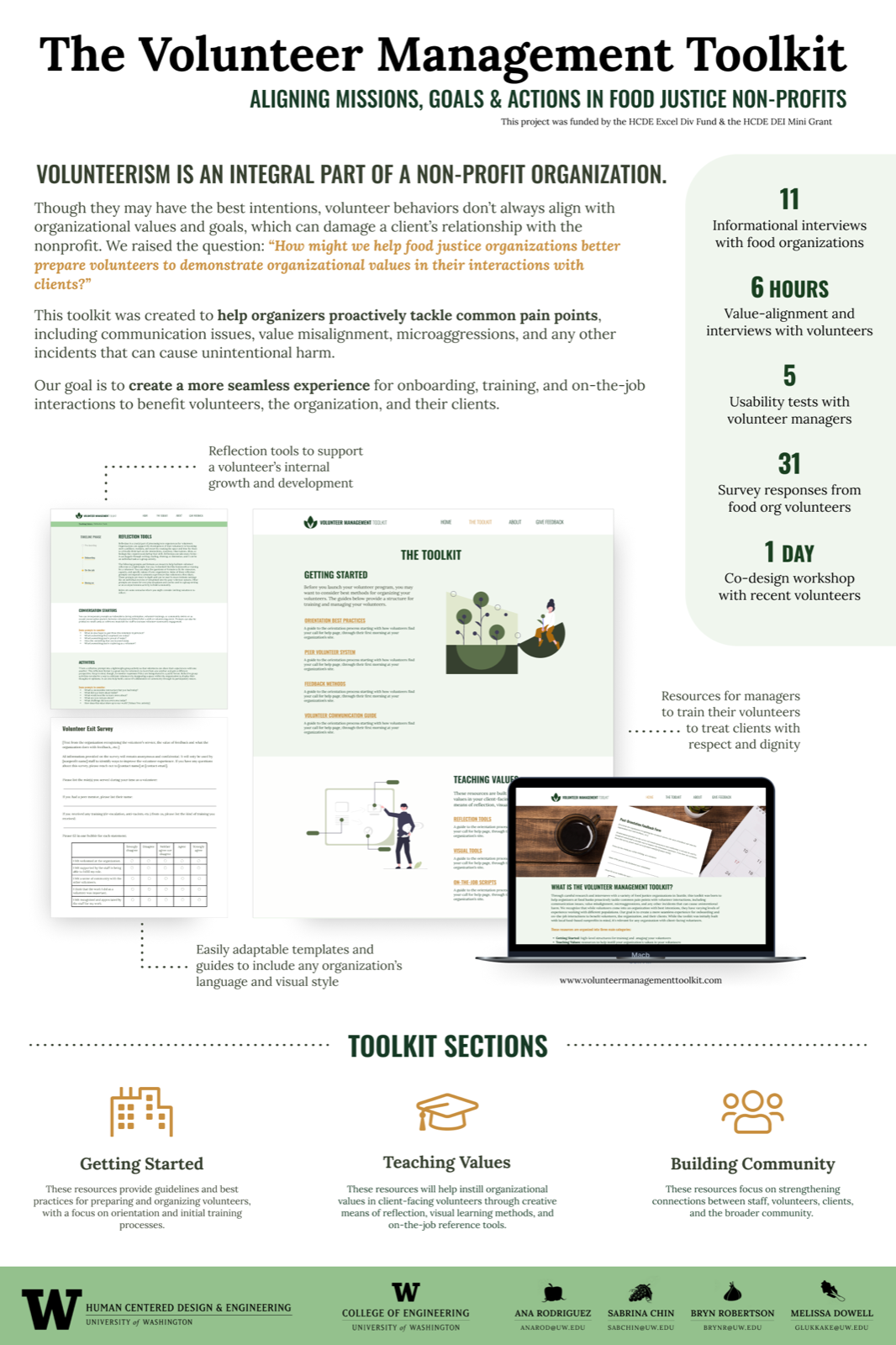
A six-month graduate capstone helping food-justice nonprofits prepare client-facing volunteers to embody organizational values — from generative research through a shipped, delivered toolkit.
Context
The Volunteer Management Toolkit was my capstone for the MS in Human Centered Design & Engineering at the University of Washington — a six-month project with a team of two UX researchers and two UX designers. We took a research-driven approach to food insecurity in Seattle, focusing on the interactions between food providers and the people who use their services. We were especially interested in the experience of volunteer managers and volunteers around orientation and education on food-justice values like anti-racism and trauma-informed care.
The problem
Volunteers are integral to nonprofits — client-facing volunteers especially, since they act as the link between an organization and the communities it serves. But even well-intentioned volunteers may not be aware of the internal biases and values they bring to their work, and when a volunteer's mismatched values show up in their actions, it can damage a client's trust in the organization. Rather than educating volunteers after something goes wrong, we wanted to prevent negative interactions in the first place.
Our project aimed to answer: How might we help food-justice organizations better prepare volunteers to demonstrate organizational values in their interactions with clients?
My role
I was one of the two designers, but worked as a UX generalist across both research and design. Our team set the path of research together and ran a range of methods to understand the problem space. I also led building the identity and wireframes in Figma.
Process
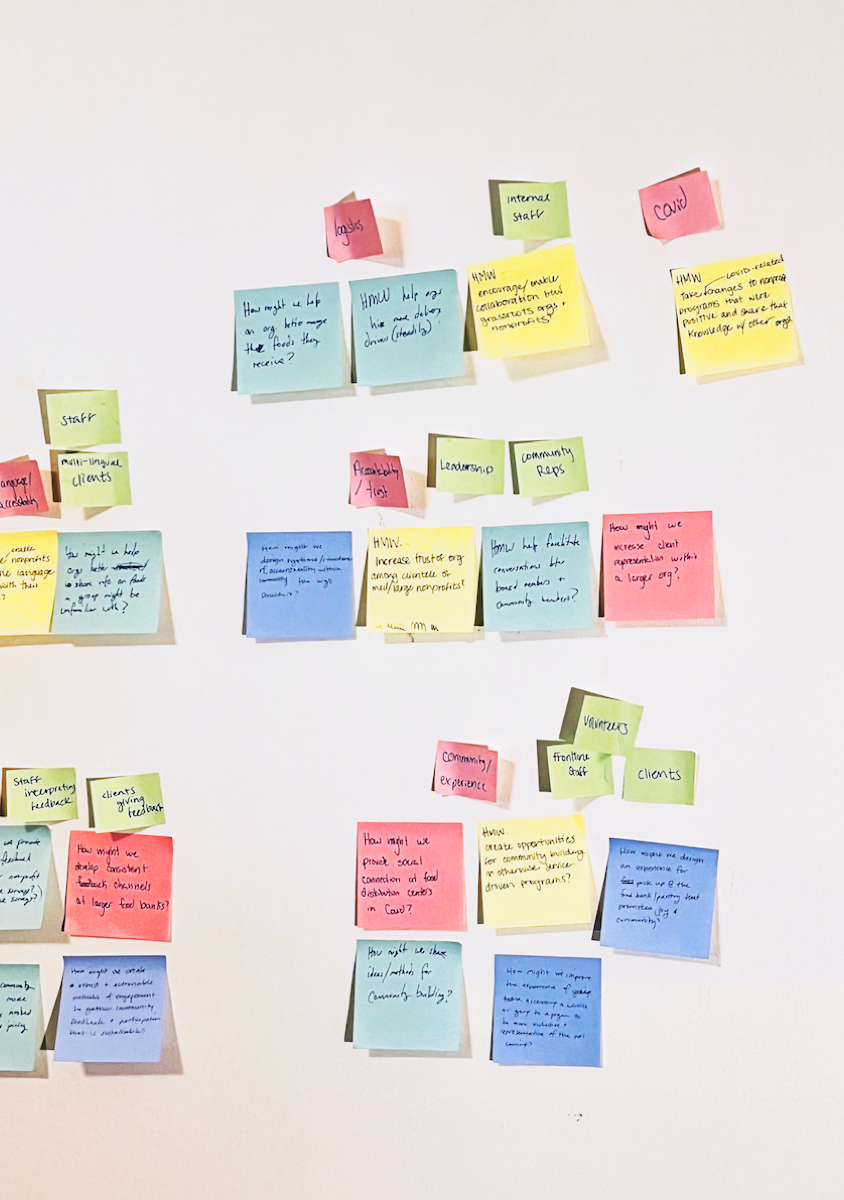
Our approach was expansive and comprehensive. We started with a literature review and information interviews with upper management and organizers across food banks, small-to-mid-sized nonprofits, urban farms, a grassroots mutual-aid group, and academia — to understand the system and the barriers to distributing food to those who are food insecure.
From there we identified a gap in value alignment between organizations and volunteers, and narrowed our scope. We spoke directly with volunteer managers and volunteers, mapped the volunteer journey, and ran a survey targeting people who had volunteered in client-facing roles at food-focused organizations in the past year. The survey fed a follow-up interview and a design activity — a values-alignment exercise where participants mapped food-justice values by importance to their role and visibility at their organization.
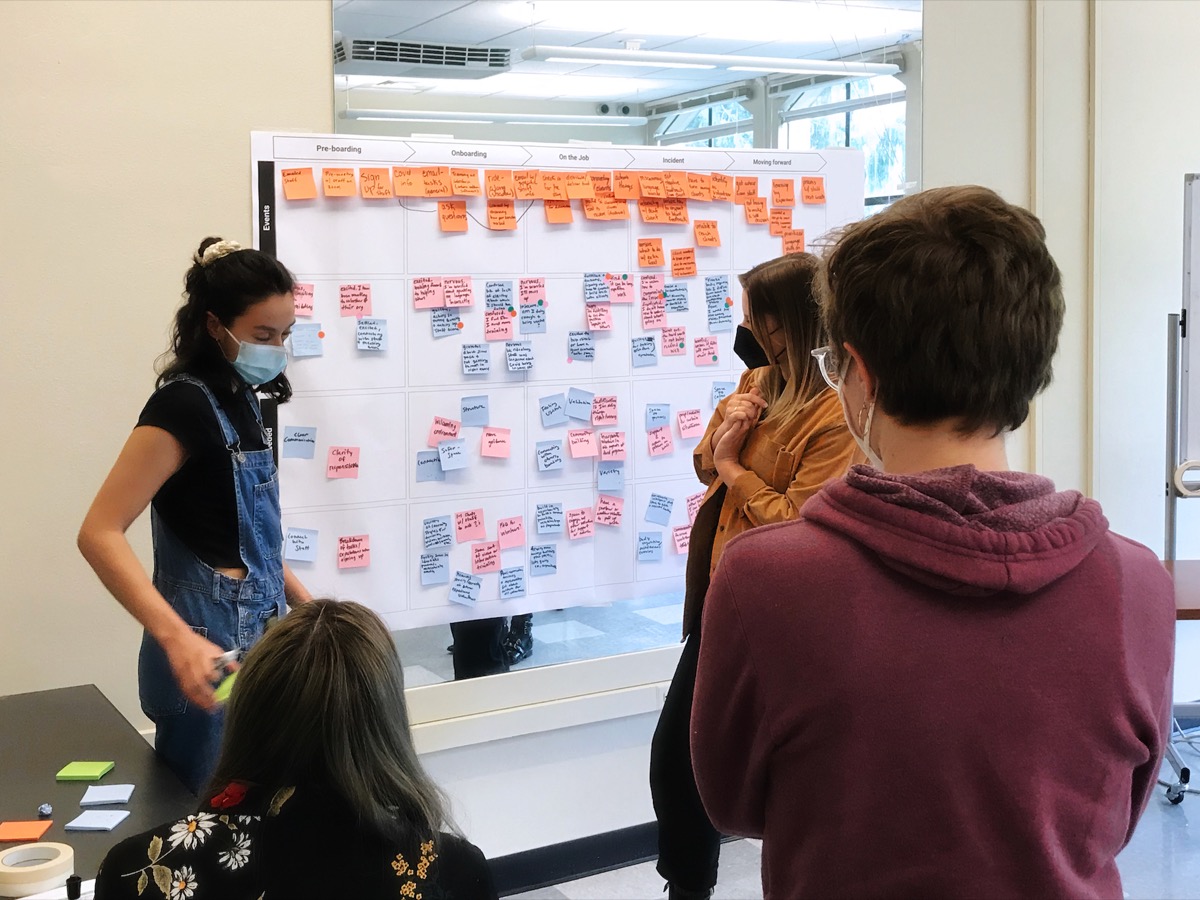
Because conversations about values can be sensitive, we included volunteers directly in the design process. We ran an in-person, three-hour co-design workshop with experienced client-facing volunteers, who identified pain points in their current-state journey, brainstormed solutions, and refined a future-state journey map as a group.
Outcome
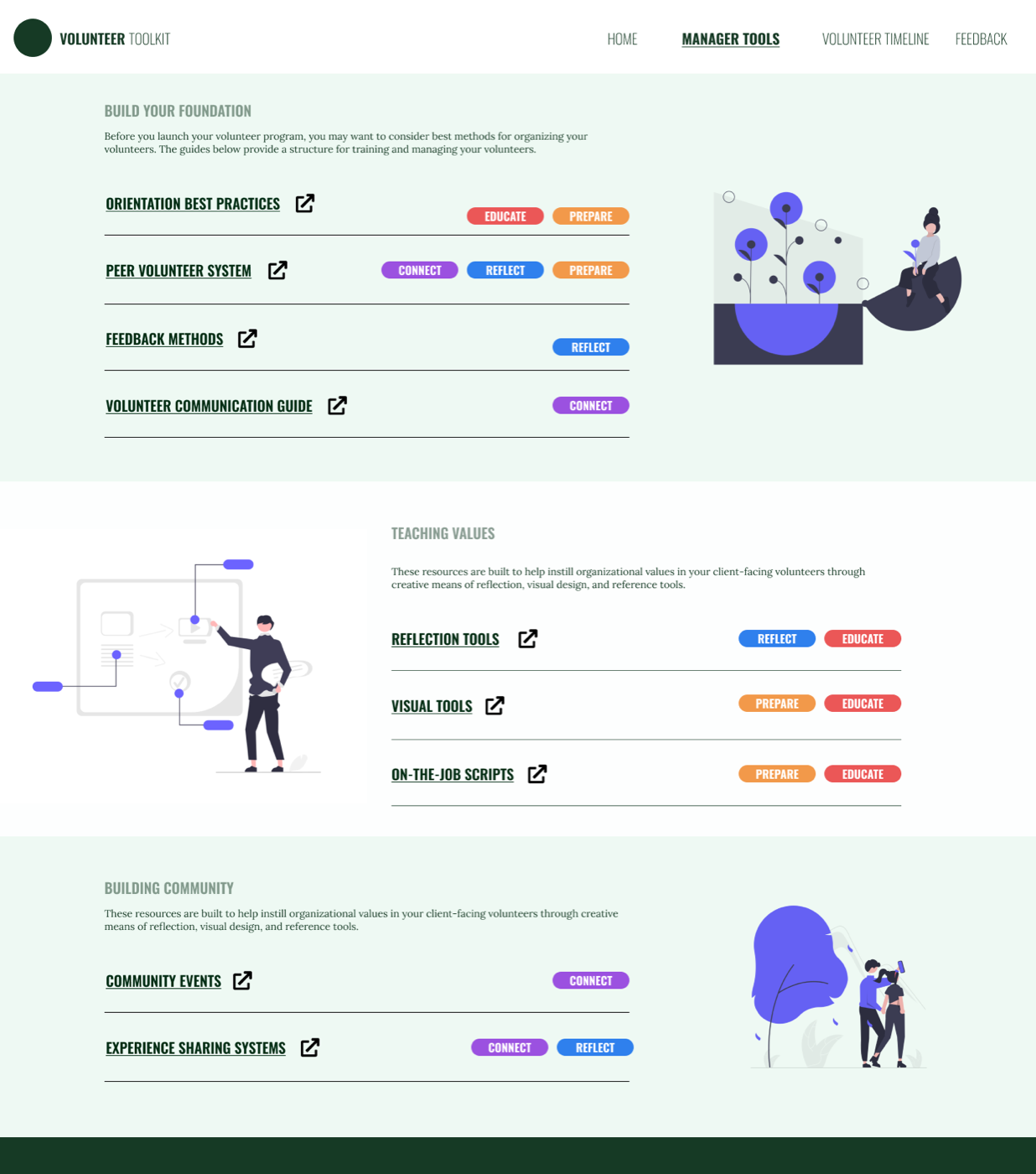
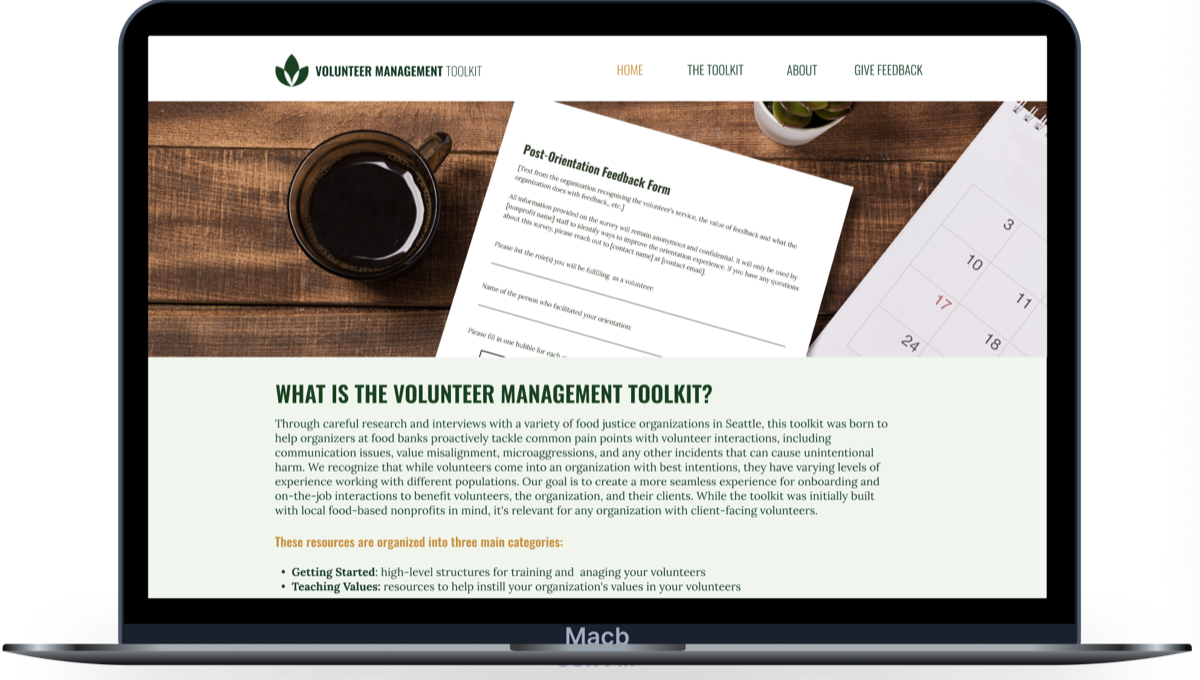
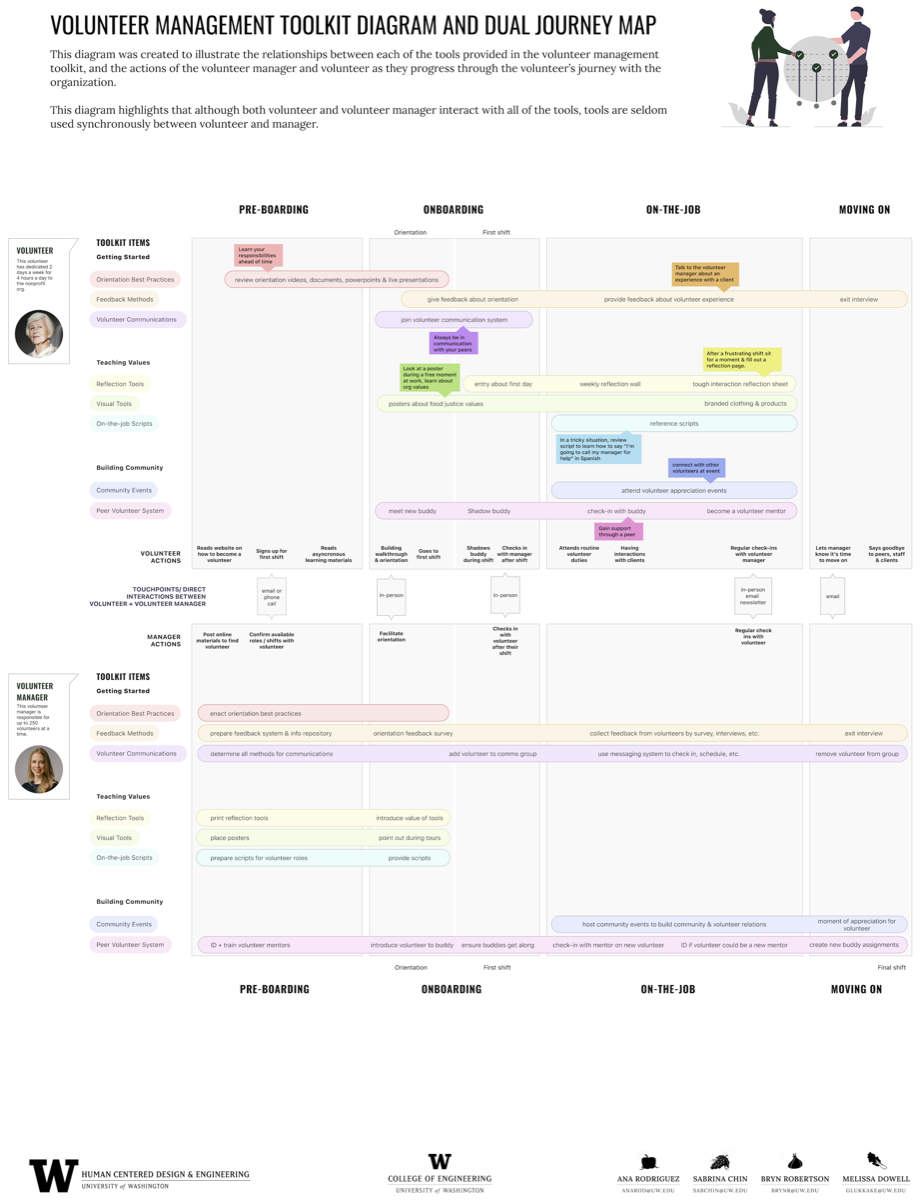
The future-state journey map inspired the resources in the finished toolkit — a set of tools a volunteer manager implements throughout a volunteer's time at an organization, adaptable to each organization's needs and capacity. We validated a mid-fidelity prototype in five evaluative sessions with volunteer managers, who found it innovative and useful, then folded their feedback into the final website. It's published at volunteermanagementtoolkit.com and was delivered to the organizations who worked with us on it.